Overview
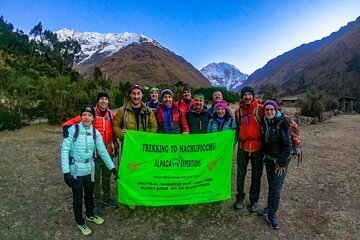
This program will take you to visit the most importan touristic attractions of Cusco city with small groups and expert tour guides for eache destinations:
1st day - City tour in Cusco city
2nd day - Sacred Valley (Overnight in Aguas calientes recomended)
3rd day - Full day tour to Machu Picchu
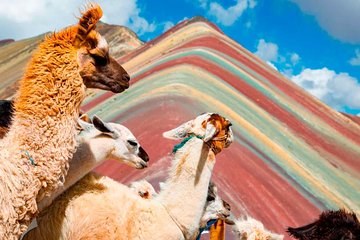
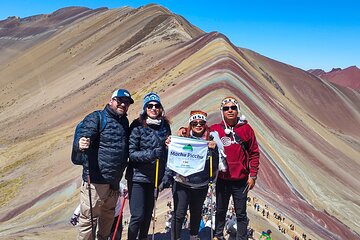
4th day - Full day tour to the rainbow Mountain
- Recommended by 98% of travelers
- Badge of Excellence
- Free cancellation up to 24 hours before
- Mobile ticket
What's included
Train Tickets Ollantaytambo - Aguas Calientes - Ollantaytambo
Transfer: Cusco - Ollantaytambo - Cusco
Lunch
Breakfast
Machu Picchu Tour & entrance ticket - Small Group
City Tour in Cusco & sacred valley - Small Group
Full day tour to the Rainbow Mountain - Small Group
Bus ticket - Aguas calientes - Machu Picchu - Aguas Calientes
Touristic Ticket for Cusco
Hotels
Food
Meeting and pickup
Pickup is offered for all travelers.
Good to know
For any questions, please contact us to the email info@andinaexpeditions.com or to the whatsApp +51 966 747 459
What to expect
Day 1 Cusco - City tour
-
Cusco
30 min
Cusco, a city in the Peruvian Andes, was once capital of the Inca Empire, and is now known for its archaeological remains and Spanish colonial architecture. Plaza de Armas is the central square in the old city, with arcades, carved wooden balconies and Incan wall ruins. The baroque Santo Domingo Convent was built on top of the Incan Temple of the Sun (Qoricancha), and has archaeological remains of Inca stonework.
-
Cusco Cathedral
30 min Admission ticket not included
The Cathedral Basilica of the Assumption of the Virgin, also known as Cusco Cathedral, is the mother church of the Roman Catholic Archdiocese of Cusco. The cathedral is located on the Plaza de Armas.
-
30 min Admission ticket not included
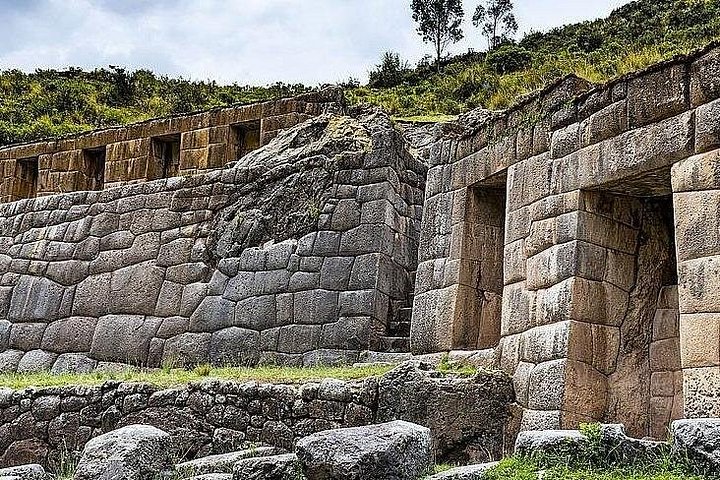
To construct Coricancha, the Inca utilized ashlar masonry, which is composed of similarly sized cuboid stones. The use of ashlar masonry made the temple much more difficult to construct, as the Inca did not use any stone with a slight imperfection or break.
By choosing this masonry type, the Inca intentionally demonstrated the importance of the building through the extent of the labor necessary to build the structure.
Through the arduous labor needed to construct buildings with ashlar masonry, this form of construction came to signify the Inca's imperial power to mobilize local labor forces. The replication throughout Andean South America of Inca architectural techniques such as those employed at Coricancha further illustrates the Inca's control over a vast geographic region -
Sacsayhuaman
30 min Admission ticket not included
Located on a steep hill that overlooks the city, the fortified complex has a wide view of the valley to the southeast. Archeological studies of surface collections of pottery at Sacsayhuamán indicate that the earliest occupation of the hilltop dates to about 900 CE. According to Inca oral history, Tupac Inca "remembered that his father Pachacuti had called city of Cuzco the lion city. He said that the tail was where the two rivers unite which flow through it, that the body was the great square and the houses round it, and that the head was wanting." The Inca decided the "best head would be to make a fortress on a high plateau to the north of the city."
But archeologists have found that Sacsayhuamán was originally built by the preceding Killke culture. The Inca expanded on what they found, beginning about the 13th century. -
Q'enqo
20 min Admission ticket not included
In Quechua, Qenqo means labyrinth or zig-zag and the temple is named for the crooked canal cut out of its rock. Although it is clear the canal carried some sort of liquid, researchers have been forced to guess at its purpose, and at what liquid it transported. Hypotheses range from carrying holy water, chicha (corn beer), or blood. All three indicate that Qenqo was used for death rituals, possibly to embalm bodies or detect whether a person lived a good life by the course the liquid followed.
-
Puka Pukara
20 min Admission ticket not included
The complex holds numerous halls, inner plazas, aqueducts, watchtowers and paths. Its role would have been a "tambo" or a place of rest and lodging. According to legend, each time the Inca visited Tambomachay, he was accompanied by a large retinue that stayed in Puka Pukara. Its fortified appearance led to it being called a fortress.
Horarios de visita: Monday–Sunday and holidays 7 a.m. to 6 p.m.
Localizacion: 7 km north-east of Cuzco (15 minutes by car and 2 hours on foot). -
Tambomachay
30 min Admission ticket not included
Tambomachay was linked to the veneration of water, an important element in the Andean world view. For that reason, it has two aqueducts with artistic engravings in the rock that transport and supply a constant flow of clean water all year round. Its name, which means "place of rest," leads experts to believe the Inca came to this bath to rest.
Today it is one of the best hiking routes because it offers tourists an adventure amid fascinating natural scenery.
Day 2 Sacred Valley Full day Tour + Lunch
-
Sacred Valley
30 min
The Sacred Valley is a region in Peru's Andean highlands. Along with the nearby town of Cusco and the ancient city of Machu Picchu, it formed the heart of the Inca Empire. Stretching roughly 60 kilometers, it’s an area of fertile farmland and Spanish colonial villages like Pisac and Ollantaytambo. Pisac is known for its Sunday handicraft market and hilltop Incan citadel.
-
Pisac
40 min
The village of Pisac lies about 28 km from Cusco, right along the Río Vilcanota or the Urubamba River as it is also known. The big attraction are the Incan ruins known as Inca Písac which lie atop a hill at the entrance to the valley. They are separated into four areas stretching along the picturesque ridge- Pisaqa, Intihuatana, Q’allaqasa, and Kinchiracay.
-
Urubamba
Urubamba is a town in the Sacred Valley region of southeastern Peru. A busy transportation hub, it sits on the Urubamba River, surrounded by rugged mountains. The town is a jumping-off point for the Maras Salt Mines, hundreds of hillside salt pools dating back to Inca times. Nearby, Moray is an Inca archaeological site defined by concentric terraces. Hang-gliding, paragliding and rafting are popular area activities.
-
Ollantaytambo
40 min
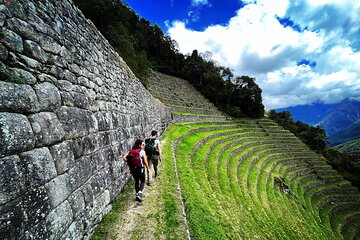
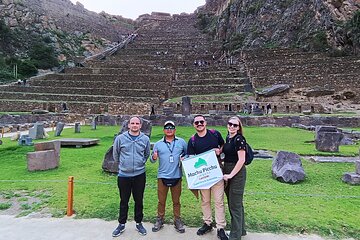
Both fortress and temple, these spectacular Inca ruins rise above Ollantaytambo, making a splendid half-day trip. (Admission is via the boleto turístico tourist card, valid for 10 days and for 16 other sites across the region.) The huge, steep terraces that guard Ollantaytambo’s spectacular Inca ruins mark one of the few places where the Spanish conquistadors lost a major battle.
-
Chinchero
30 min
Chinchero is a small Andean Indian village located high up on the windswept plains of Anta at 3765m about 30km from Cusco. There are beautiful views overlooking the Sacred Valley of the Incas, with the Cordillera Vilcabamba and the snow-capped peak of Salkantay dominating the western horizon. Chinchero is believed to be the mythical birthplace of the rainbow. Its major claim to tourism is its colourful Sunday market which is much less tourist-orientated than the market at Pisac. The village mainly comprises mud brick (adobe) houses, and locals still go about their business in traditional dress. The village may have been an important town in Inca times. The most striking remnant of this period is the massive stone wall in the main plaza which has ten trapezoidal niches. The construction of the wall and many other ruins and agricultural terraces (which are still in use) are attributed to Inca Tupac Yupanqui who possibly used Chinchero as a kind of country resort.
Day 3 Machupicchu full day with overnight in Aguas Calientes
-
25 min Admission ticket included
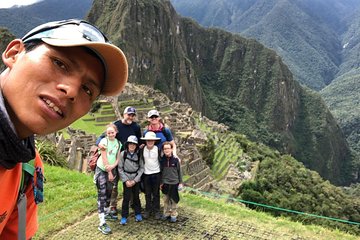
Early on the morning we will go to the bus station to cath the bus from Aguas calientes to Machu picchu to start with our adventure visiting the most important touristic attraction of South america.
-
Machu Picchu
2 hours
Machu Picchu is an Incan citadel set high in the Andes Mountains in Peru, above the Urubamba River valley. Built in the 15th century and later abandoned, it’s renowned for its sophisticated dry-stone walls that fuse huge blocks without the use of mortar, intriguing buildings that play on astronomical alignments and panoramic views. Its exact former use remains a mystery.
Day 4 Full day tour to the Rainbow Mountain
-
13 hours Admission ticket included
Since pre-Inca times the mountain has been a place of worship and offerings and this tradition continues untill nowadays.
Most trips that let you see the “Rainbow Mountain” requires a trek of at least five or six days. That has changed with this new itinerary. We have designed for this walk, so now that it can be done as a day trip.
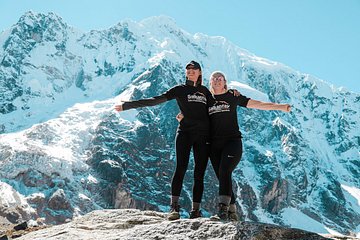
On this walk you will see picturesque villages, beautiful “adobe” houses, herds of llamas and alpacas, and you will have a magnificent view of the glacier Ausangate (6,385 m / 20,945 feet).
Cancellation Policy
For a full refund, cancel at least 24 hours before the start time.
Times are local to the experience (America/Lima).
Additional Information
- Suitable for all physical fitness levels
- Mobile or paper ticket accepted
- Up to 15 travelers per booking
FAQs about Cusco: 4D/3N - City Tour - Sacred Valley - Machu Picchu & Rainbow Mountain
Can I cancel Cusco: 4D/3N - City Tour - Sacred Valley - Machu Picchu & Rainbow Mountain for free?
Yes. For a full refund, cancel at least 24 hours before the start time.
How long does it take?
It takes about 4 days.
Is pickup offered?
Pickup is offered for all travelers.
What's included?
- Train Tickets Ollantaytambo - Aguas Calientes - Ollantaytambo
- Transfer: Cusco - Ollantaytambo - Cusco
- Lunch
- Breakfast
- Machu Picchu Tour & entrance ticket - Small Group
- City Tour in Cusco & sacred valley - Small Group
- Full day tour to the Rainbow Mountain - Small Group
- Bus ticket - Aguas calientes - Machu Picchu - Aguas Calientes
What's not included?
- Touristic Ticket for Cusco
- Hotels
- Food
Which places does it visit?
It visits Cusco Cathedral, Sacsayhuaman, Q'enqo, Puka Pukara, Tambomachay, Sacred Valley, Pisac, Urubamba.
Which languages is it offered in?
It is offered in English, Spanish.
What fitness level is needed?
It is suitable for all physical fitness levels.
Operated by Andina Expeditions